
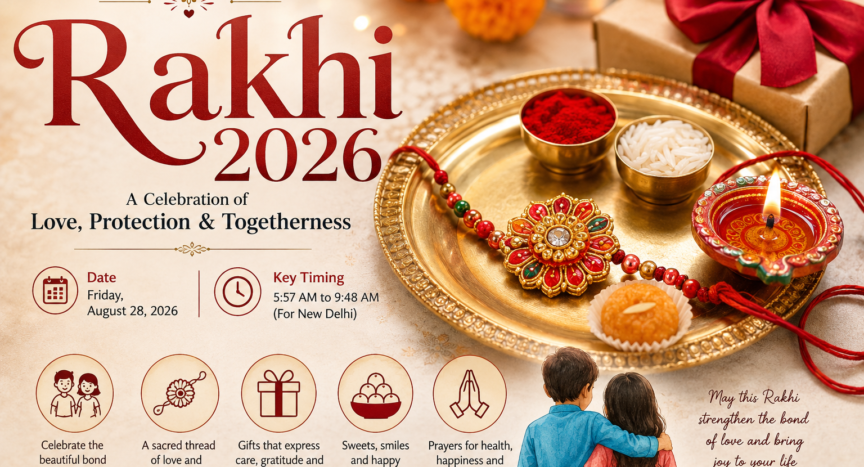
Raksha Bandhan 2026 will be celebrated on Friday, August 28, 2026. Also popularly known as Rakhi, the festival celebrates the loving bond between brothers and sisters and symbolizes affection, care, blessings and a lifelong promise of support.
According to the Hindu calendar, Raksha Bandhan is observed on the Shravana Purnima, or full-moon day of the month of Shravana. In 2026, the Purnima tithi begins on August 27 at 9:08 AM and ends on August 28 at 9:48 AM according to the Panchang timings cited for Delhi and several other Indian locations.
Rakhi 2026 Date
Festival: Raksha Bandhan / Rakhi
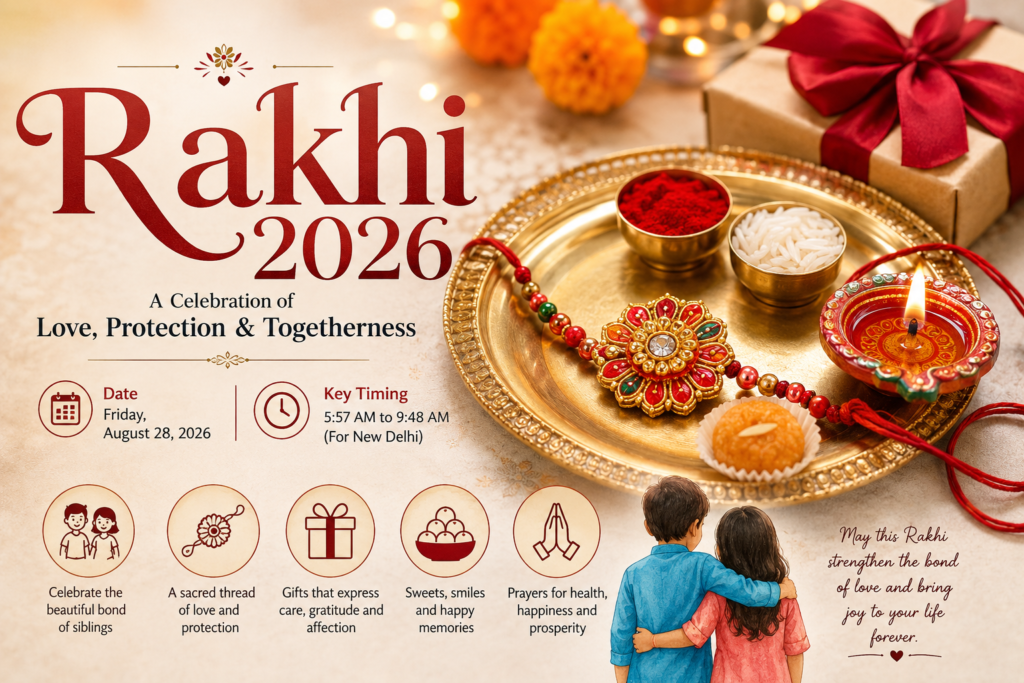
Date: Friday, August 28, 2026
Tithi: Shravana Purnima
Purnima Begins: August 27, 2026, at 9:08 AM
Purnima Ends: August 28, 2026, at 9:48 AM
Because Panchang calculations can vary slightly by location, people should check the timings for their specific city before performing the ceremony.
Key Timing Details for Rakhi 2026
One of the most important considerations while celebrating Raksha Bandhan is choosing an appropriate time for tying the Rakhi.
For New Delhi, the listed Raksha Bandhan thread ceremony window is approximately 5:57 AM to 9:48 AM on August 28, 2026. The cited Panchang indicates that Bhadra has ended before sunrise, so the morning ceremony can be performed within the specified local window.
Traditional guidance generally recommends avoiding Bhadra for auspicious Raksha Bandhan rituals. Panchang sources also note that the Aparahna period, meaning the later part of the day, is traditionally considered an appropriate period for Rakhi rituals when available.
Important note about Muhurat
Rakhi timings are location-specific because sunrise, sunset and other Panchang calculations differ from one city to another. For example, published 2026 timings differ between Delhi, Maharashtra, West Bengal and other locations.
Therefore, families following a particular regional tradition should consult their local Panchang or family priest for the most appropriate Muhurat.
What Is the Significance of Raksha Bandhan?
The word Raksha Bandhan broadly refers to a bond of protection. The Rakhi tied around the wrist represents the emotional connection between siblings and the wishes for each other’s happiness, well-being and prosperity.
Traditionally, sisters tie a sacred thread around their brothers’ wrists and pray for their health, happiness and long life. Brothers traditionally offer gifts and express their commitment to supporting and caring for their sisters.
However, the meaning of Raksha Bandhan has evolved beyond a one-way promise of protection. Today, the festival is increasingly seen as a celebration of mutual love, respect, emotional support and family togetherness.
Traditional Raksha Bandhan Rituals
The celebration generally begins with preparing a Rakhi thali. Depending on family and regional customs, it may contain:
- Rakhi or sacred thread
- Roli or kumkum
- Akshat (rice grains)
- Diya
- Sweets
- Flowers
- Traditional offerings
The usual ceremony follows these steps:
1. Tilak
The sister applies tilak or kumkum to her brother’s forehead as a traditional blessing.
2. Rakhi Tying
She ties the Rakhi around her brother’s wrist while offering prayers for his well-being and happiness.
3. Aarti
In many families, the brother’s aarti is performed with a diya as part of the traditional ceremony.
4. Exchange of Gifts
The brother traditionally gives his sister a gift as a gesture of love and appreciation. Today, siblings often exchange gifts with each other.
5. Sharing Sweets
The ceremony usually ends with sharing traditional sweets and spending time together with family.
Regional Traditions of Raksha Bandhan
Rakhi is celebrated differently across India, with local customs adding their own character to the festival.
In many North Indian households, the focus is on the Rakhi ceremony, family gatherings, sweets and gifts. In some communities, Raksha Bandhan is also associated with religious observances connected with Shravana Purnima.
Different regions may have different names, rituals and cultural practices surrounding the day. This diversity is one of the reasons Raksha Bandhan remains an important part of India’s cultural heritage.
Rakhi Beyond Brothers and Sisters
Modern Raksha Bandhan celebrations increasingly emphasize the broader idea of relationships and mutual support.
Sisters may tie Rakhi to brothers, cousins or other loved ones. Some families also celebrate the bond between sisters and between close friends. In many communities, Rakhi is used as a symbol of peace, harmony and social unity.
This broader interpretation reflects the festival’s central message: relationships become stronger when people care for, respect and stand by one another.
How to Celebrate Rakhi 2026 Meaningfully
Rakhi does not have to be limited to exchanging expensive gifts. Families can make the occasion more meaningful by:
- Spending quality time together
- Calling siblings who live in another city or country
- Choosing handmade or personalized Rakhis
- Exchanging thoughtful gifts
- Preparing traditional sweets at home
- Taking family photographs
- Supporting local artisans by buying traditional Rakhis
- Including elderly family members in the celebration
- Teaching children about the cultural meaning behind Raksha Bandhan
For siblings who cannot meet physically, video calls, online Rakhi delivery and digital celebrations can help maintain the connection.
Rakhi 2026: A Celebration of Love and Togetherness
Raksha Bandhan 2026 is more than a date on the Hindu calendar. It is an opportunity for families to pause from their busy routines and celebrate one of life’s most cherished relationships.
The Rakhi may be a simple thread, but its emotional meaning is much deeper. It represents memories shared during childhood, family traditions, affection between siblings and the promise to remain connected through life’s changing circumstances.
As families celebrate Rakhi on Friday, August 28, 2026, the essence of the festival remains timeless: love, respect, care, blessings and the enduring bond between siblings.
Happy Raksha Bandhan 2026!